
Tucson Genealogy Records
Genealogy records for Tucson residents are managed through Pima County offices rather than the city. Tucson is the second largest city in Arizona and has a rich history dating back to Spanish colonial times. Birth certificates, death records, and marriage licenses all go through county departments. Pima County has two recorder office locations and a dedicated health department vital records office. You can trace Tucson family history using county records, state archives, and free online databases that contain documents from the 1800s forward.
Tucson Genealogy Quick Facts
Pima County Manages Tucson Genealogy Records
All vital records for Tucson residents go through Pima County. This is how Arizona works. Cities do not maintain birth, death, or marriage records. Everything flows through county offices. For Tucson, that means three main offices handle different types of genealogy documents.
The Pima County Recorder maintains property deeds, land records, military discharges, and other historical documents. The main office is at 240 N Stone Avenue in downtown Tucson. An eastside location operates at 6920 E Broadway Boulevard. Phone number for both is 520-724-4350. These offices can help you find property records and other documents that show where your Tucson ancestors lived and worked.
The Pima County Health Department Vital Records office handles birth and death certificates. This office is at 3950 S. Country Club Road, Suite 100 in Tucson. Phone number is 520-724-7932. They have birth records from 1950 onward and death records from 2008 onward. For older records, you need to contact the state archives or use the free genealogy database.
Each certified copy costs $20. Non-certified copies for genealogy run $5. Bring valid ID when you visit.
Tucson City Clerk Office
The Tucson City Clerk office does not handle vital records. The clerk manages city council business, elections, public records requests for city operations, and administrative matters. If you need a birth certificate, death record, or marriage license for genealogy research, contact Pima County instead.
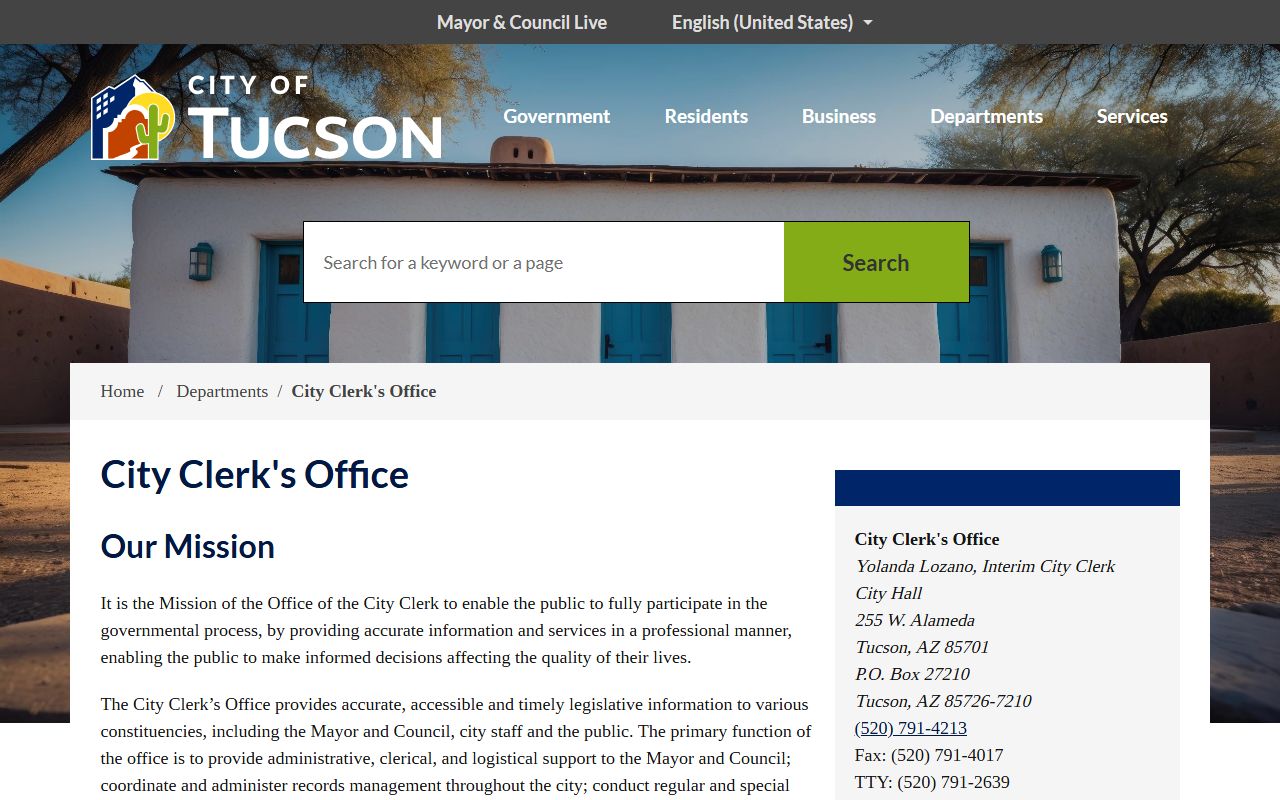
The Tucson City Clerk shown above handles city administrative records, not vital records for genealogy purposes.
The city clerk office sits at City Hall, 255 W. Alameda in Tucson. Phone number is 520-791-4213. Email is cityclerk@tucsonaz.gov. For genealogy researchers, this office might help with historical city documents or archived municipal records. But vital records require a trip to county offices.
Tucson Marriage Records
Marriage licenses for Tucson couples come from the Pima County Clerk of Superior Court. The main office is at 110 West Congress Street in downtown Tucson. Phone number is 520-724-3200. Under Arizona law, couples must apply for marriage licenses in person at a county clerk office.
Certified copies of marriage records cost $30. The clerk of court maintains marriage records, divorce records, probate files, and civil court cases. All of these can help with genealogy research. Marriage records show full names, ages, and addresses. Divorce files list children and property. Probate records reveal inheritance and family relationships.
Historical court records in Pima County go back decades. The clerk of court can search their files for a research fee. Old marriage and divorce records often contain details that help genealogy researchers connect family members.
Tucson Historical Genealogy Resources
Tucson has unique genealogy resources due to its long history. The city was part of the New Spain colonial territory and later Mexico before becoming part of the United States in 1854. This means some family records exist in Mexican and Spanish archives rather than American systems.
The Arizona Historical Society has its main research facility in Tucson. Founded in 1884, this organization holds manuscripts, photographs, diaries, and oral histories. Their Tucson location has the most extensive collection of Arizona genealogy materials anywhere in the state. They can help you find records that official government offices do not have.
Church records are another important resource for Tucson genealogy. The San Xavier del Bac mission has baptismal and marriage records going back to 1768. Catholic parish records in Tucson proper start in the 1860s. These records predate the state vital records system by decades and can fill important gaps in your family tree.
State Genealogy Resources for Tucson
Arizona maintains a free genealogy database at genealogy.az.gov. You can search birth and death certificate images here at no cost. Birth records older than 75 years and death records older than 50 years are open for research. This database covers the entire state including Tucson and Pima County.
The Arizona State Archives in Phoenix also holds Tucson area records. The vital records guide explains what is available and how to access it. Arizona residents get free access to Ancestry records from the state archives. The Arizona Memory Project has historical photos and documents that might show your Tucson ancestors.
FamilySearch operates centers in Tucson that provide free access to subscription databases. The FamilySearch Arizona guide lists all free records available online.
Tucson Court Records for Genealogy
Court records go beyond vital statistics. The Arizona eAccess portal lets you search court records from most counties 24 hours a day. For Pima County specifically, you can find civil cases, criminal records, probate files, and family court matters. These records often contain details about family relationships that vital records miss.
Probate records are especially valuable for genealogy. When someone died, probate court handled their estate. Files list heirs, family members, and property. Old probate cases in Tucson can help you understand who was related to whom and what they owned. Certification costs $30 per document from the clerk of court.
Tucson Cemetery Records
Cemetery records help confirm death dates and find family burial plots. Tucson has several historic cemeteries with records going back to the 1800s. Many are indexed on Find A Grave and Interment.net. These free sites include headstone photos and burial information.
The Evergreen Cemetery in Tucson has graves dating to the late 1800s. Holy Hope Cemetery and other Catholic cemeteries have records linked to parish records. Jewish, Protestant, and secular cemeteries also maintain records that can help with your Tucson genealogy research.
Nearby Cities for Genealogy Research
If your ancestors lived in the Tucson area, they might have moved around southern Arizona. Several other communities in Pima County use the same county offices for vital records. Smaller towns like Oro Valley, Marana, and Sahuarita are all in Pima County.
For ancestors who lived in central Arizona, check Phoenix and other Maricopa County cities. Major cities in Maricopa County include Mesa, Chandler, Gilbert, Glendale, and Scottsdale. Different county offices handle those areas.
Note: Always verify which county handled records for your ancestors based on where they actually lived, not just the nearest big city.