
Arizona Genealogy Records
Arizona genealogy records help you trace your family roots across the Grand Canyon State. You can search birth certificates, death records, marriage licenses, and court documents through state and county offices. The Arizona Department of Health Services holds vital records from 1909 to the present day. County recorders and clerks of court keep property deeds, probate files, and other family history documents. Arizona residents can also access free genealogy databases through the state archives and local libraries.
Arizona Genealogy Quick Facts
Arizona Vital Records for Genealogy
The Bureau of Vital Records at the Arizona Department of Health Services is the main source for birth and death certificates in Arizona. This office has kept vital records since July 1909. They also hold delayed birth records that go back to 1855 and death records from as far back as 1877. The bureau sits at 150 North 18th Avenue in Phoenix. You can reach them by phone at (602) 364-1300 or toll free at (888) 816-5907. Hours run Monday through Friday from 8:00 a.m. to 5:00 p.m.
Arizona is a closed record state. This means vital records are not public documents. Only certain people can get certified copies of birth and death certificates under ARS 36-302. You must be the person named on the record, a parent, spouse, grandparent, adult child, or legal guardian. For genealogy research, family members can request non-certified copies if they prove their relationship to the person on the record. Non-certified copies cost $5.00 each while certified copies cost $20.00.
The state bureau no longer offers same day walk-in service. For quick help, visit a county health department vital records office instead. The ADHS Vital Records website has forms, fees, and mailing info for all requests.
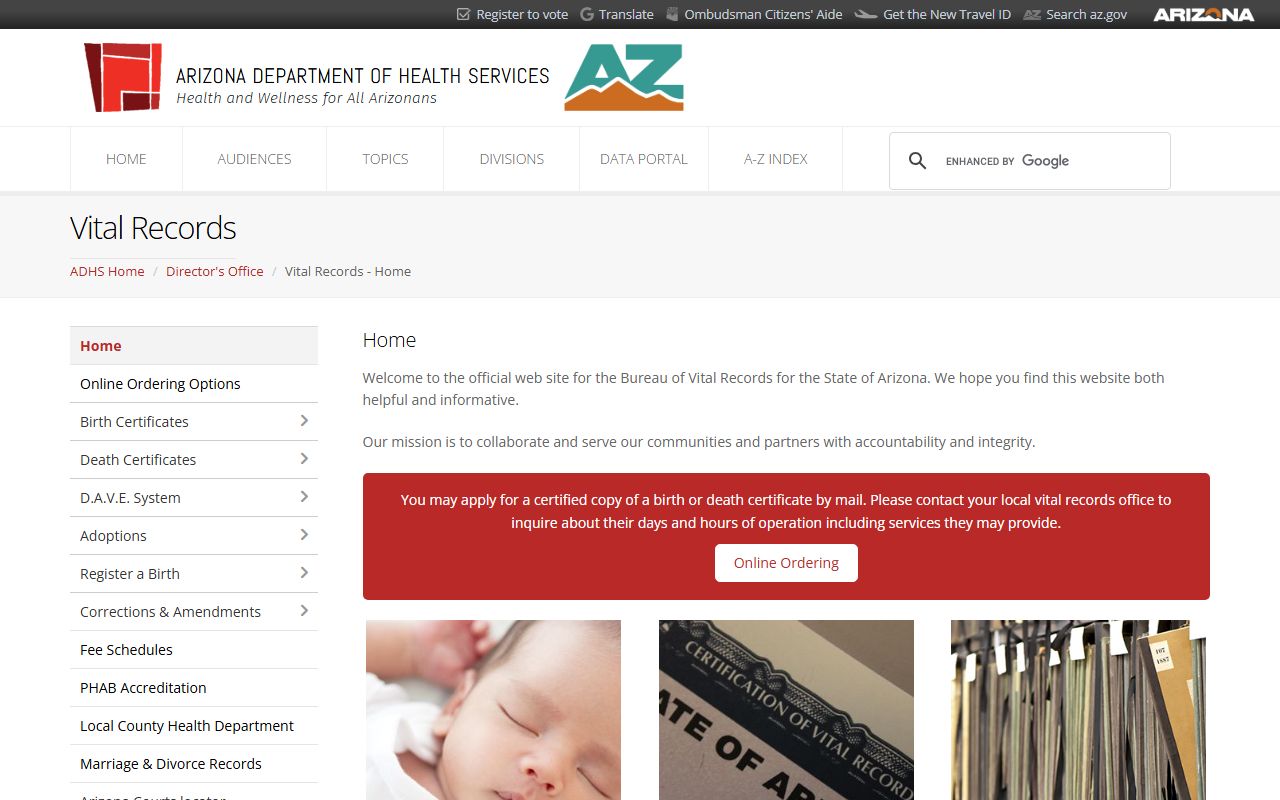
The ADHS portal shown above lets you download application forms and learn about eligibility rules for Arizona genealogy records.
Arizona State Archives Genealogy Resources
The Arizona State Library, Archives and Public Records holds a wealth of genealogy materials. Located at the Polly Rosenbaum Archives and History Building at 1901 W Madison Street in Phoenix, this facility stores historical documents that predate the state vital records system. You can find court records, naturalization papers, prison records, voter registration lists, and probate files here. The archives phone number is 602-926-3720. Visits require an appointment, with hours from 8:30 a.m. to 4:30 p.m. on weekdays.
Arizona residents get free access to Ancestry records from the state archives. This is a major benefit for genealogy research. The Arizona State Archives genealogy guide explains how to use this free access and what collections are available. Materials include assessment rolls, brand books, census records, maps, school records, wills, and much more.
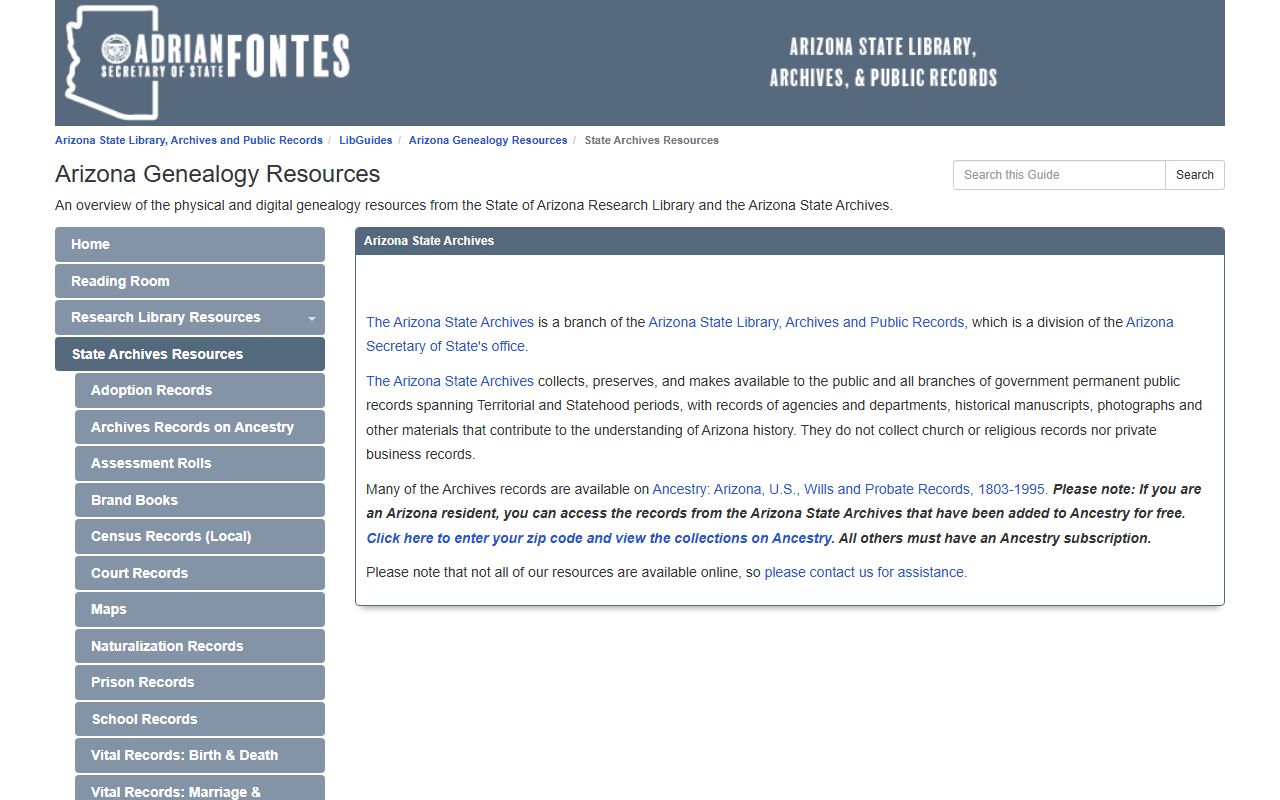
The archives guide above lists all record types held at the state facility for Arizona genealogy researchers.
For birth and death records specifically, the archives has a dedicated vital records guide. Birth records become available for genealogy research 75 years after the date of birth. Death records open up 50 years after the date of death. This means you can freely access many historical Arizona vital records without proving a family relationship.
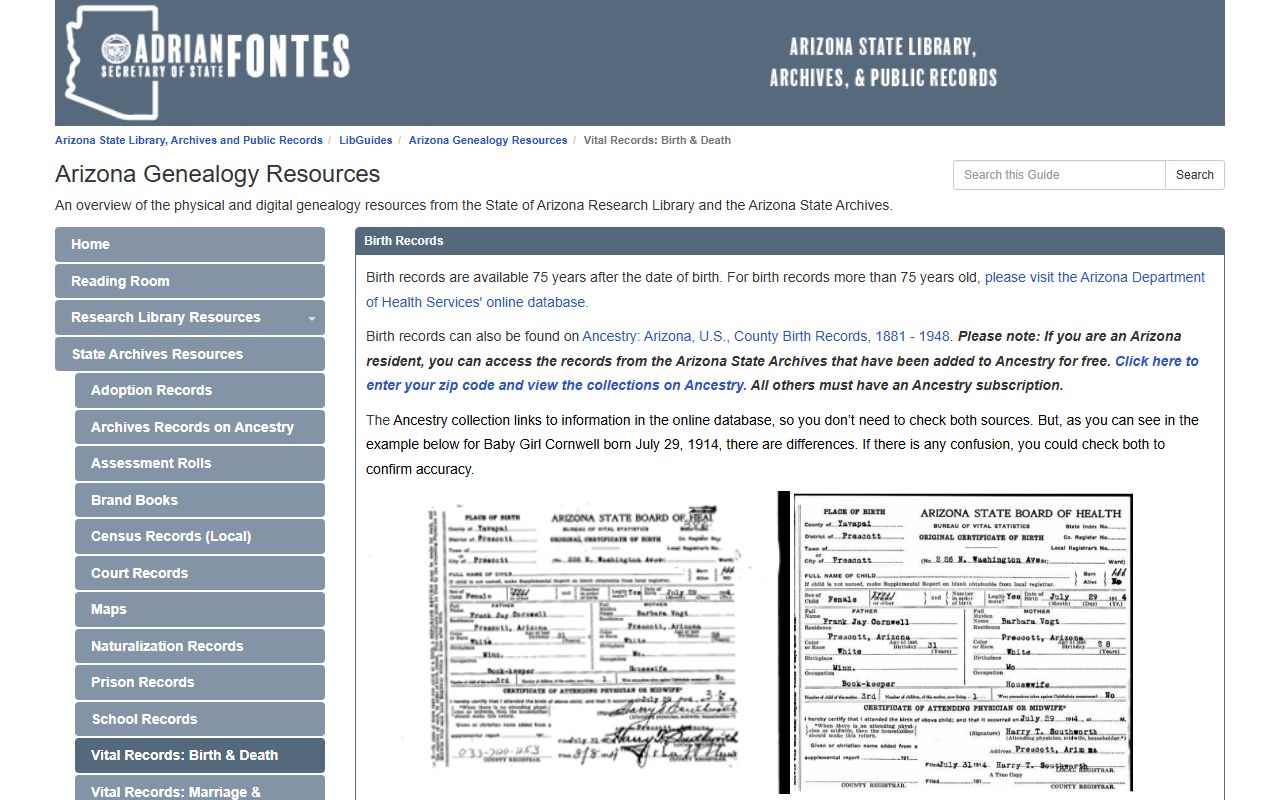
This page explains the 75-year and 50-year rules for Arizona genealogy vital records access.
Free Arizona Genealogy Database
Arizona offers a free online genealogy database at genealogy.az.gov. This is a powerful tool for family history research. The database contains searchable records and actual images of birth and death certificates from Arizona. You do not need to pay anything to use this resource. There are no subscription fees or per-search charges. Anyone can access it from any computer with internet access.
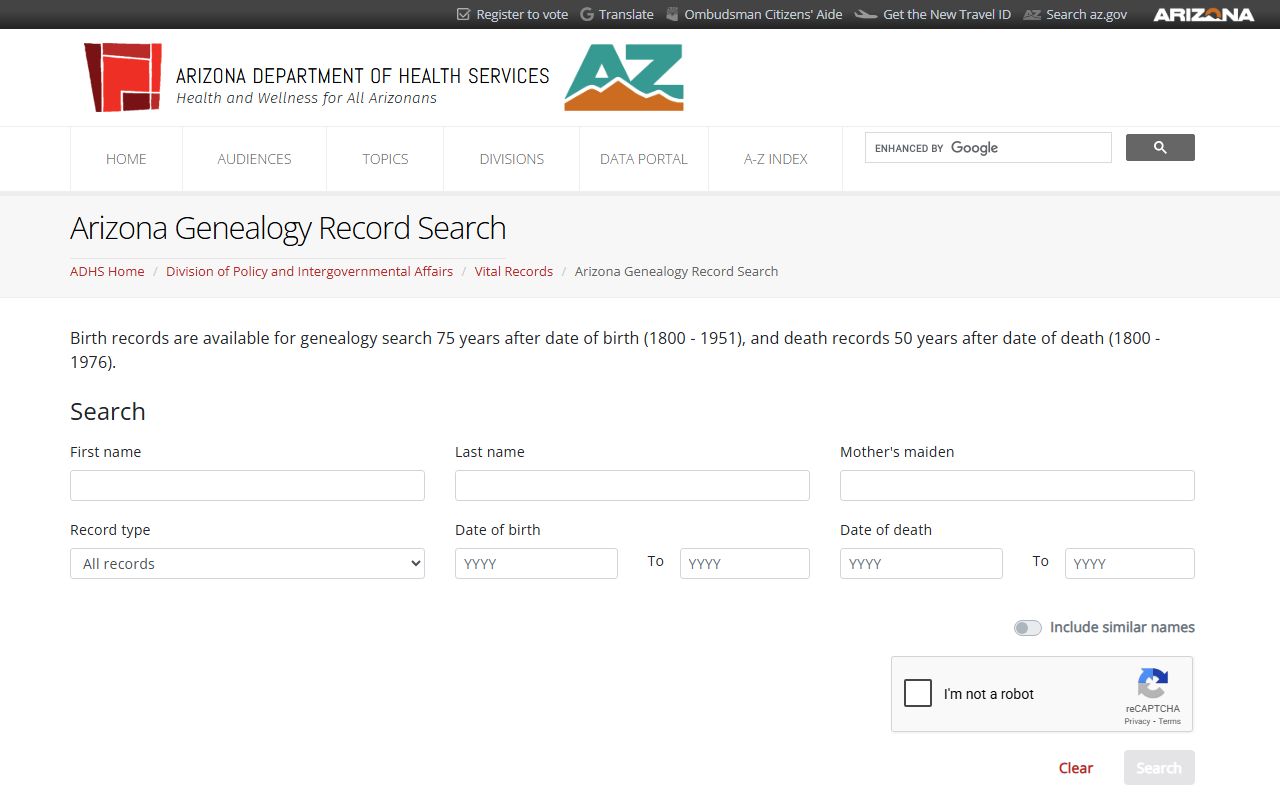
The free database shown above gives you direct access to historical Arizona birth and death certificate images.
The records in this free database follow the same time rules as the archives. Birth records from more than 75 years ago are included. Death records from more than 50 years ago are included. You can search by name, date, or location to find your Arizona ancestors. The actual certificate images let you see details that might not appear in index records.
Arizona County Genealogy Records
Each of the 15 counties in Arizona keeps its own genealogy records. County recorders maintain property deeds, land records, and some historical documents. Clerks of the Superior Court hold marriage licenses, divorce records, probate files, and civil court cases. These offices often have records that predate the state vital records system. Many Arizona counties now offer online search tools for their records.
Maricopa County has the most robust online resources since it serves the Phoenix metro area. The Maricopa County Recorder provides access to over 50 million documents going back to 1871. The Maricopa County Vital Records office has five locations across the valley where you can get same-day service for Arizona vital record requests.
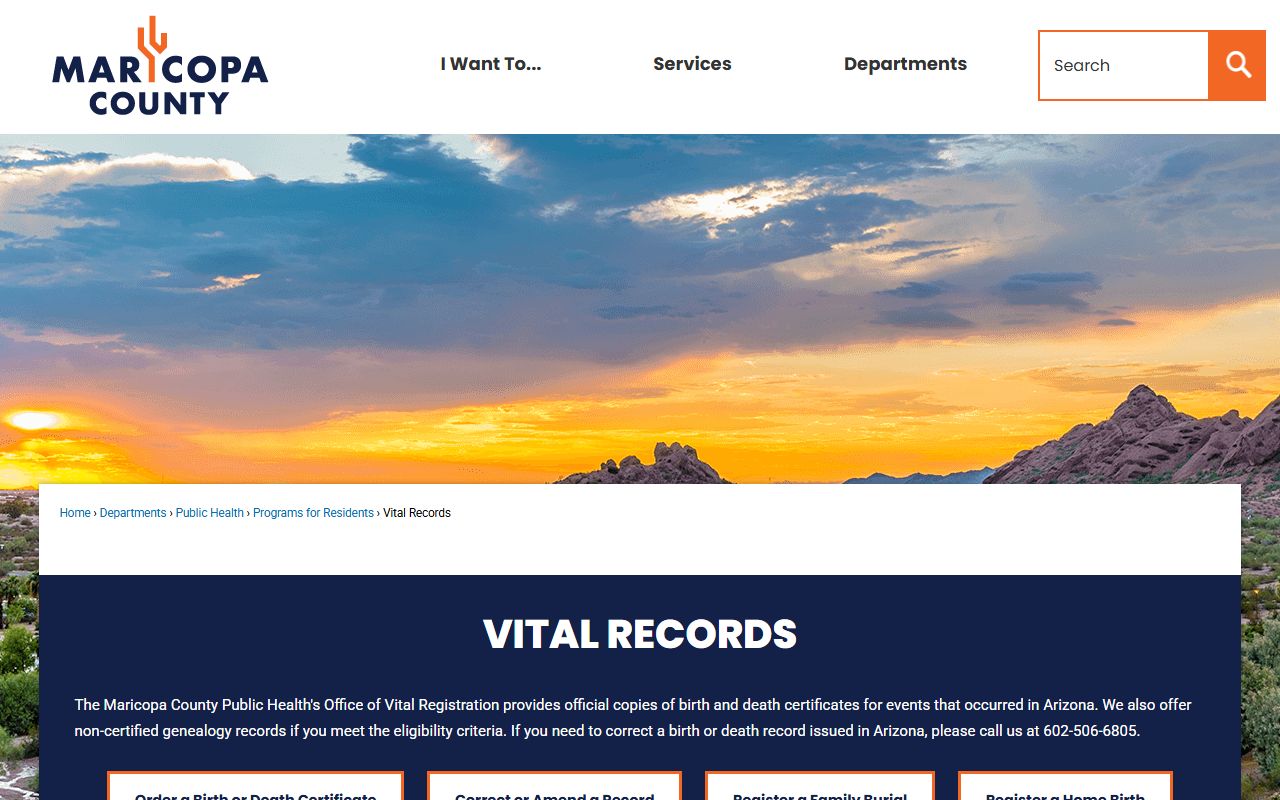
Maricopa County vital records offices serve genealogy researchers at five locations in the Phoenix area.
Other large counties like Pima and Pinal also have online record systems. Smaller rural counties may require phone calls or in-person visits. Each county page on this site lists the specific contact info and online tools available for that location.
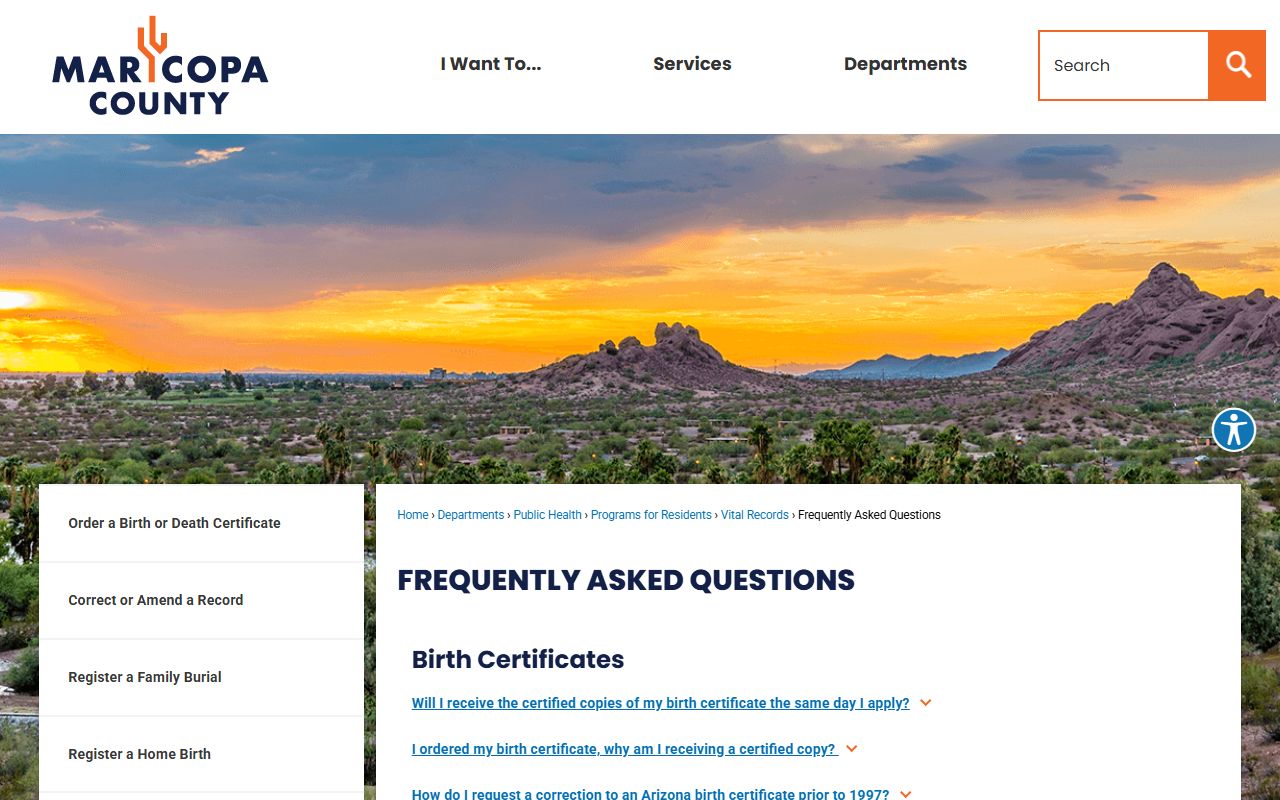
The FAQ page above answers common questions about getting Arizona genealogy records in Maricopa County.
Who Can Get Arizona Vital Records
Arizona follows strict eligibility rules for vital records. Under Arizona Administrative Code R9-19-403, only certain people can obtain certified copies of birth certificates. The list includes the person named on the certificate if they are 18 or older, parents whose names appear on the record, a spouse with notarized permission, grandparents, adult children, adult grandchildren, adult siblings, and legal guardians.
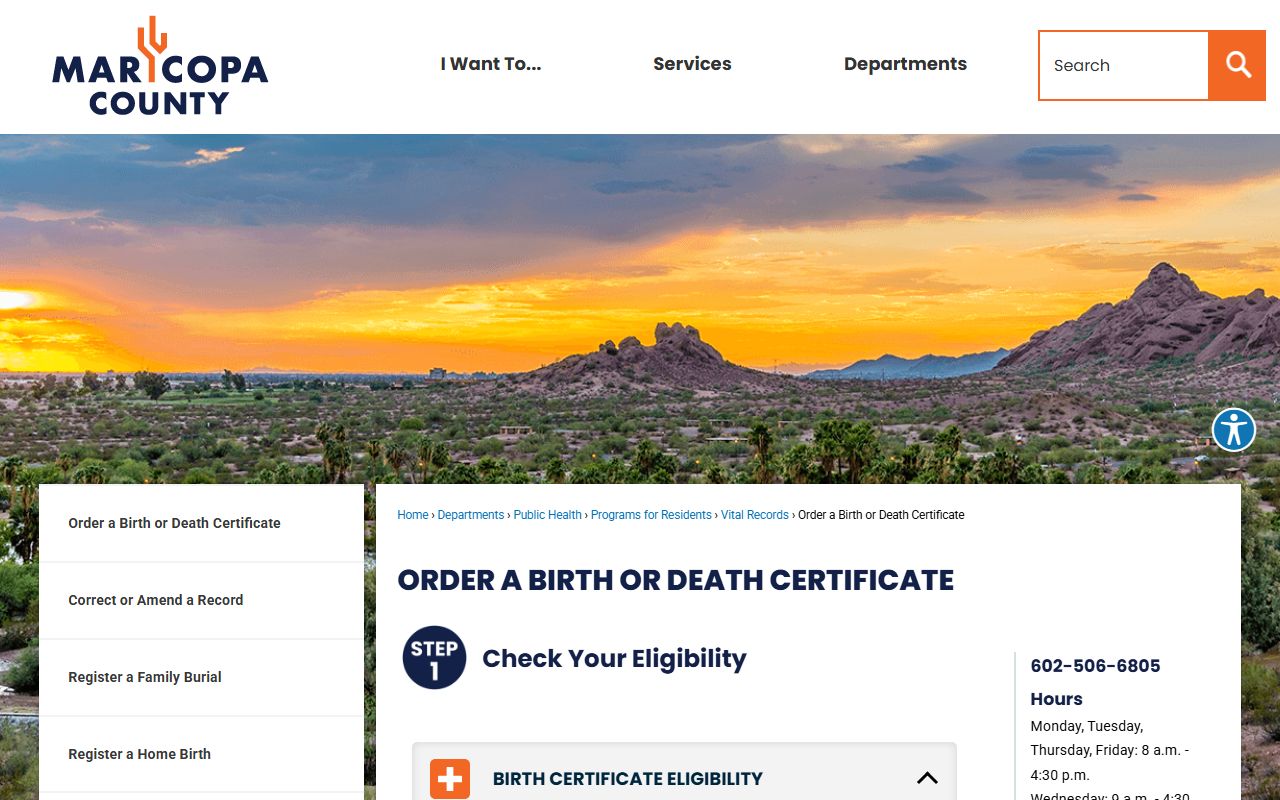
This eligibility chart shows who qualifies to request Arizona vital records for genealogy purposes.
For genealogy research, family members may request non-certified copies if they can document their relationship to the person on the record. You will need to submit proof such as your own birth certificate showing the family connection. Non-certified copies work fine for family history research. They contain the same information as certified copies but cannot be used for legal purposes like passport applications.
Death certificates have similar rules. The health department only issues certified copies to immediate family members and certain others with a legitimate interest. However, death records older than 50 years are open for genealogy research through the state archives and free online database.
Arizona Court Records for Genealogy
Court records provide valuable genealogy information beyond vital records. Marriage licenses, divorce decrees, probate files, and civil cases all contain family details. Arizona courts use the eAccess system for online record searches. You can access this portal at eaccess.azcourts.gov to search court records from most Arizona counties.
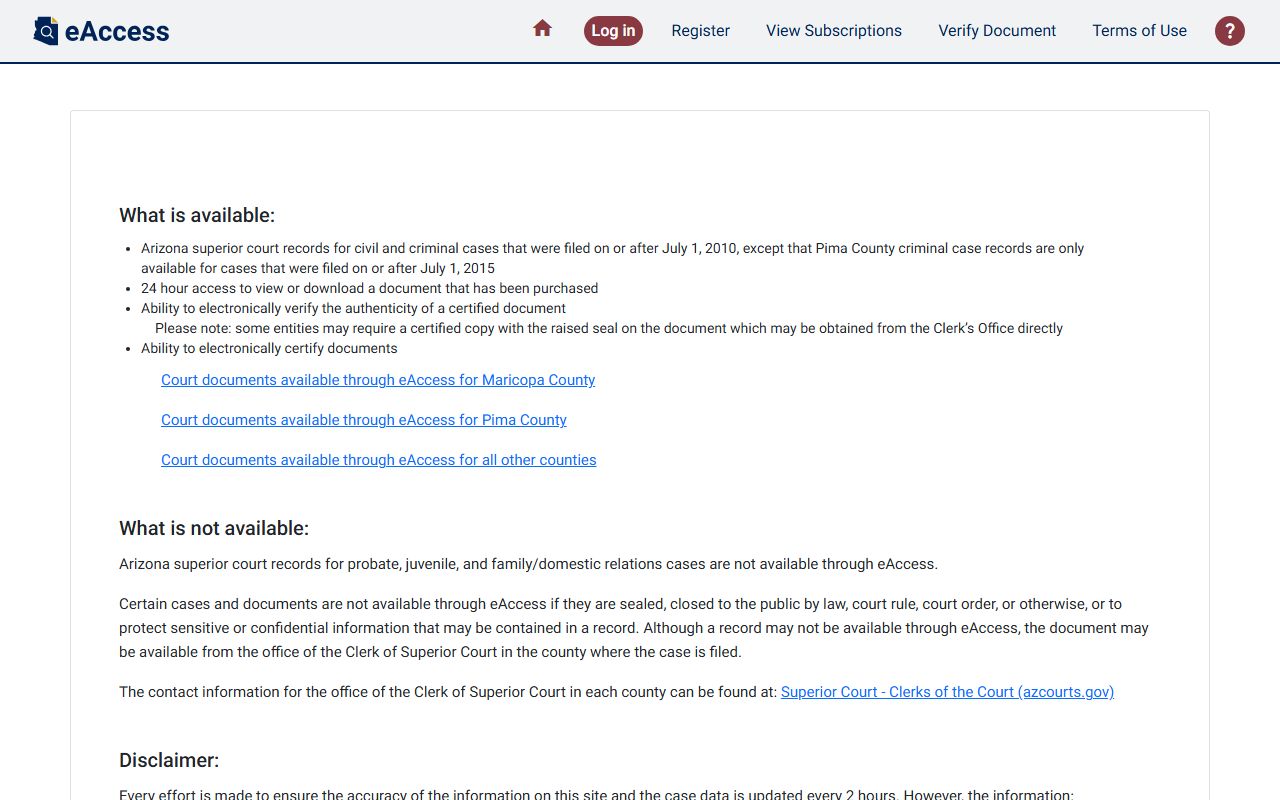
The eAccess portal above provides 24/7 online access to Arizona court records useful for genealogy research.
Marriage licenses are issued by the Clerk of the Superior Court in each county. Under ARS 25-121, couples must apply in person at a county clerk office. Marriage records contain the full names of both parties, their ages, addresses, and sometimes parents' names. These details help genealogy researchers connect family members across generations. Most counties charge $98 for a marriage license and around $30 to $43 for certified copies of existing marriage records.
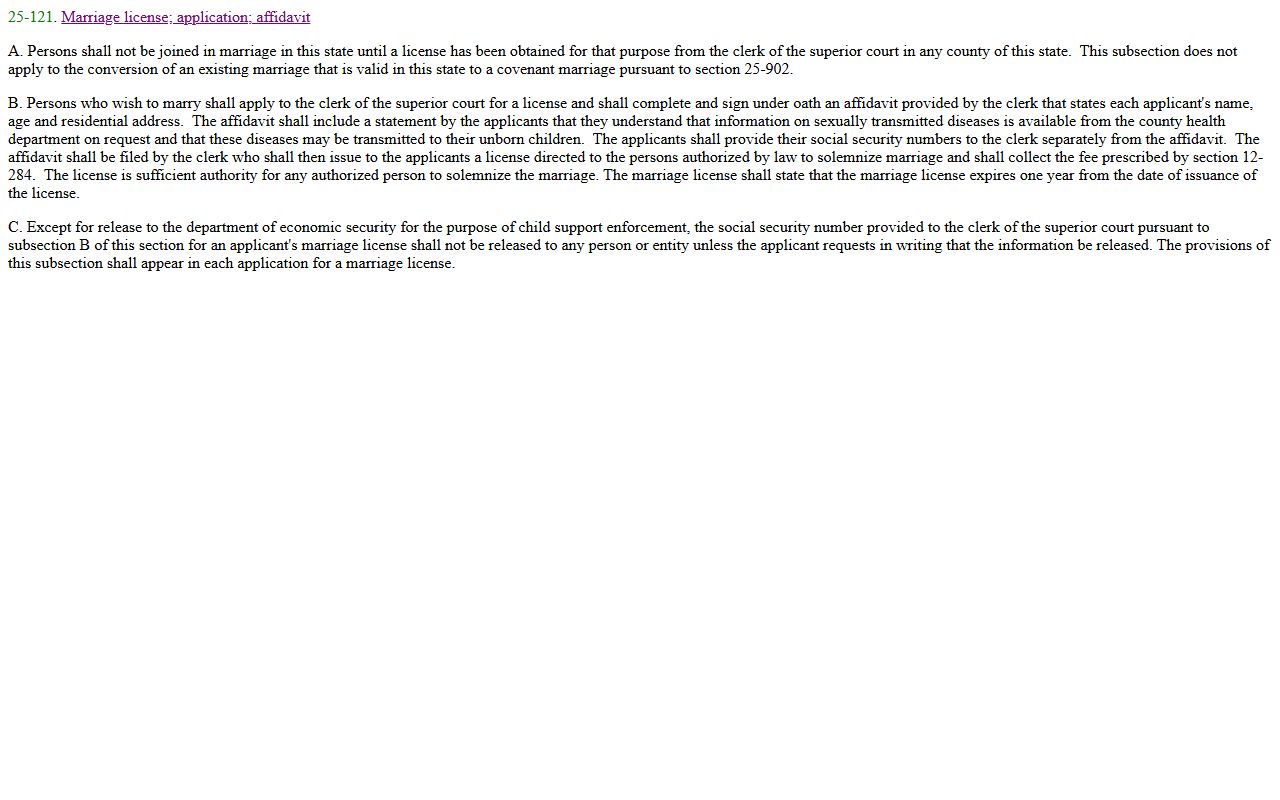
The statute above establishes the legal requirements for Arizona marriage licenses.
Arizona Public Records Law
Arizona has strong public records laws that help genealogy researchers. Under ARS 39-121.01, most government records are open to public inspection. This includes court documents, property records, and many historical files. Agencies must provide copies upon request and can only charge fees that cover their actual costs.
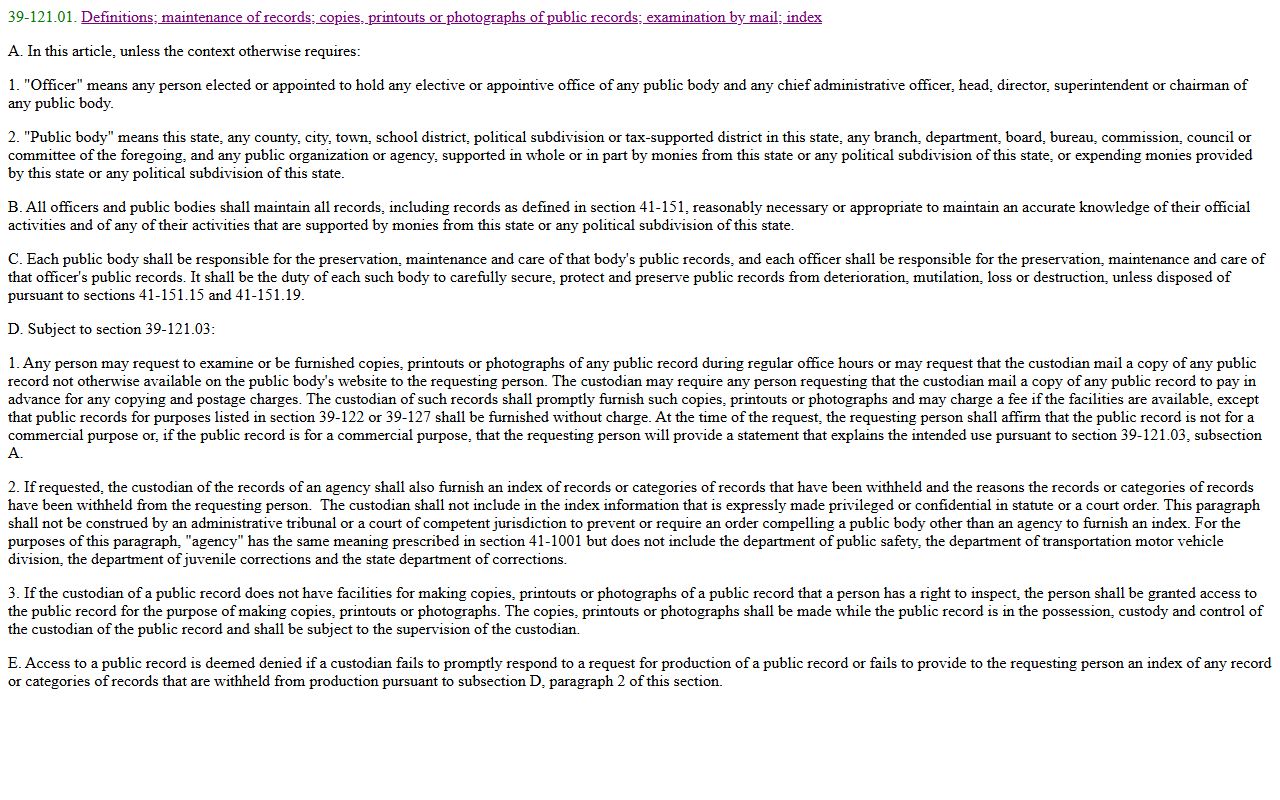
Arizona law guarantees access to most public records for genealogy and other research purposes.
Vital records are the main exception. Birth and death certificates are not public records in Arizona. The state treats them as confidential with limited access as described earlier. However, the 75-year and 50-year rules mean that historical vital records eventually become available for genealogy research. Court records, property documents, and most other government files remain fully accessible to anyone.
Arizona Vital Records System
ARS 36-302 establishes the state registrar of vital records and the entire vital records system in Arizona. This law gives the state registrar power to organize, operate, and maintain the only official system of vital records in the state. The registrar works under the Arizona Department of Health Services. All births and deaths must be registered with this office.
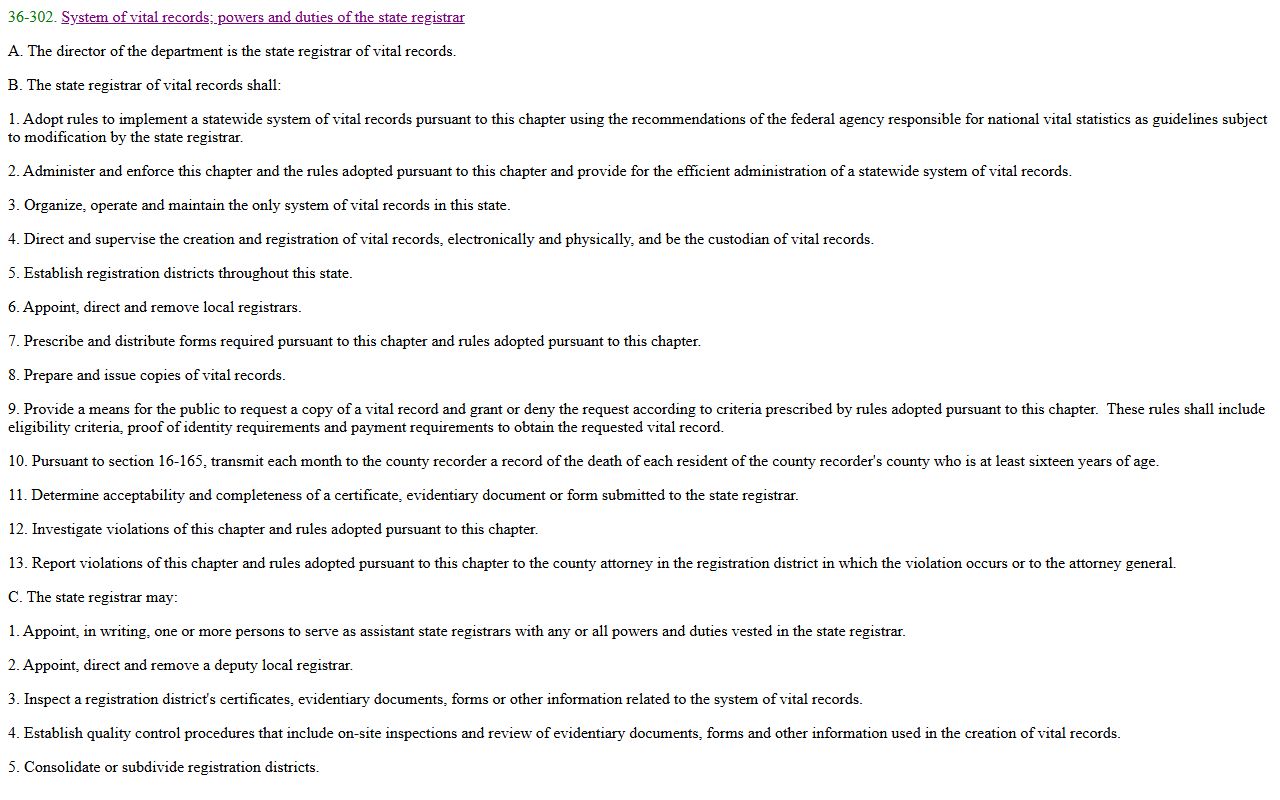
This statute creates the legal foundation for Arizona vital records that genealogy researchers use.
County health departments work with the state bureau to register and issue vital records. When a baby is born in an Arizona hospital, the facility files the birth registration with the state. Death certificates are filed by funeral homes and medical examiners. Marriage licenses go through the county clerk system rather than vital records. Understanding how Arizona organizes these records helps you know where to look for specific genealogy documents.
Arizona Memory Project
The Arizona Memory Project offers another free resource for genealogy research. This digital archive contains nearly 280,000 items including photographs, maps, manuscripts, and oral histories. The collection includes over 180,000 photographs with more than 33,000 digital images available online. You can search by name, place, date, or topic to find materials related to your Arizona ancestors.
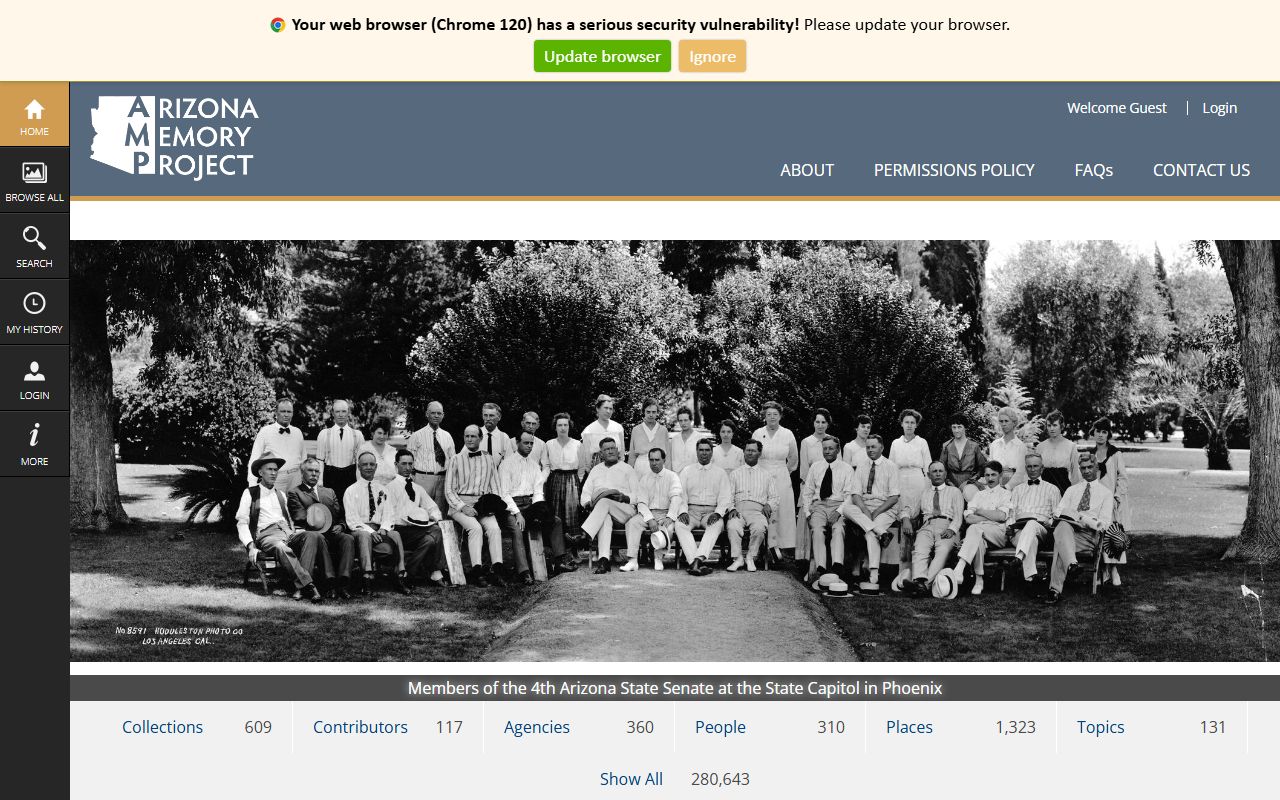
The Arizona Memory Project provides free access to historical photos and documents for genealogy research.
Materials come from libraries, museums, and archives across the state. You might find a photo of your great-grandparents, a newspaper article mentioning your family, or a map showing where your ancestors lived. The project continues to add new content regularly. Contact azmemory@azlibrary.gov with questions about the collections.
More Arizona Genealogy Resources
FamilySearch offers extensive free Arizona genealogy records. The FamilySearch Arizona guide lists digitized microfilms, county courthouse records, and other materials available at no cost. FamilySearch Centers located throughout Arizona provide free access to subscription databases. There are locations in Phoenix, Tucson, Mesa, Chandler, Gilbert, Glendale, Flagstaff, Scottsdale, and over 40 other Arizona communities.
The Arizona Historical Society maintains research libraries and archives at four regional locations in Tucson, Tempe, Flagstaff, and Yuma. Founded in 1884, this organization holds manuscripts, photographs, diaries, and oral histories that document Arizona family stories. Their collections can fill gaps that official records cannot.
Cemetery records help confirm death dates and find family burial plots. Find A Grave has the world's largest gravesite collection with many Arizona entries. The site Interment.net offers nearly 1 million Arizona cemetery records spanning the 1800s to 2000s.
For military ancestors, FamilySearch military records include Arizona discharge records from 1918 to 1989, WWII draft cards from 1940 to 1945, and Civil War service records. The Arizona Department of Veterans Services at dvs.az.gov can help with DD-214 certification and military service verification.
Naturalization records reveal when ancestors became citizens. The US District Court of Arizona naturalization records from 1870 to 1955 include petitions, declarations of intention, and oaths of allegiance. For records before 2022, contact the National Archives at Riverside, California at 951-956-2000.
Census records track families over time. Federal census records for Arizona include 1870, 1880, 1890 (fragment), 1900, 1910, 1920, 1930, and 1940. Territorial census records from 1864, 1866, 1867, and 1882 predate statehood. Indian census rolls from 1885 to 1940 are also digitized and available online.
Browse Arizona Genealogy Records by County
Each county in Arizona has its own recorder and clerk of court who keeps genealogy records. Pick a county below to find local contact info and resources for that area.
Arizona Genealogy in Major Cities
Residents of Arizona cities access genealogy records through their county offices. Pick a city below to learn about resources in that area.